Why Muscle Matters More Than Most Women Realize After 40
Why Muscle Matters More Than Most Women Realize After 40
For many women entering perimenopause and menopause, the conversation around aging quickly becomes focused on weight gain, hormones, hot flashes, or fatigue.
But one of the most important predictors of long-term health, resilience, independence, and longevity is often overlooked:
Muscle mass.
In fact, for women over 40, maintaining muscle may be one of the single most important investments they can make for healthy aging.
This is not about bodybuilding or chasing unrealistic body ideals.
It is about preserving strength, metabolism, brain health, balance, energy, mobility, and long-term independence for the decades ahead.
Muscle Is About Far More Than Appearance
Many women still think of muscle primarily in cosmetic terms.
Physiologically, however, muscle is one of the body’s most important metabolic and protective organs.
Healthy muscle tissue influences:
blood sugar regulation
insulin sensitivity
metabolism
inflammation
mitochondrial function
bone density
balance and fall prevention
cognitive health
physical resilience during illness or injury
Muscle is not simply “something athletes need.”
It is foundational to healthy aging.
Muscle Helps Regulate Metabolism & Blood Sugar
Muscle tissue is highly metabolically active.
The more healthy muscle tissue we maintain, the more efficiently the body handles glucose and insulin.
This matters tremendously during midlife because many women begin developing:
insulin resistance
abdominal weight gain
blood sugar instability
increased inflammation
metabolic slowdown
Loss of muscle contributes significantly to these changes.
Improving muscle mass and muscle quality helps improve insulin sensitivity, stabilize blood sugar, and reduce the risk of conditions such as:
Type 2 diabetes
cardiovascular disease
metabolic syndrome
This is one reason why the old advice to simply “eat less and exercise more” often fails women after 40.
Women do not simply need smaller bodies.
They need stronger, healthier, more metabolically resilient bodies.
Muscle Is Critical for Bone Health
Resistance training does far more than build muscle.
When muscles pull against bone during strength training, they create mechanical stress that stimulates bone remodeling and strengthening.
This becomes increasingly important during and after menopause as declining estrogen accelerates bone loss.
Without adequate muscle stimulus and resistance training, women face a significantly higher risk of:
osteopenia
osteoporosis
frailty
falls
fractures
Strong muscles help protect strong bones.
And maintaining strength now may profoundly influence quality of life decades later.
Muscle Strength Predicts Longevity
One of the most fascinating areas of aging research is the strong relationship between muscle strength and survival.
Studies involving women between ages 63 and 99 have shown that measures such as:
grip strength
chair-stand performance
lower body strength
…strongly predict longevity and overall survival.
Muscle strength is increasingly viewed as a marker of physiological reserve — the body’s ability to withstand illness, stress, surgery, injury, or aging itself.
Research also shows that individuals with greater muscle strength are more likely to survive serious medical events and maintain independence as they age.
This is not about aesthetics.
This is about resilience.
The Reality of Sarcopenia
After age 30, women naturally begin losing muscle mass.
This process, called sarcopenia, accelerates during menopause.
Women may lose:
approximately 3–8% of muscle mass per decade after age 30
and as much as 5–10% per decade after age 50
At the same time, many women experience:
increasing abdominal fat
declining energy
poorer recovery
worsening insulin resistance
decreased strength
reduced balance and stability
The drop in estrogen during menopause contributes significantly to this shift by accelerating muscle loss while promoting increased fat storage.
Unfortunately, many women unintentionally worsen this process through:
chronic dieting
under-eating protein
excessive cardio
overtraining
inadequate recovery
avoiding strength training
Why Strength Training Matters So Much During Midlife
Strength training is one of the most powerful tools women have to influence how they age.
Consistent resistance training can help:
preserve muscle mass
improve metabolism
stabilize blood sugar
reduce visceral fat
strengthen bones
improve balance
support brain health
improve confidence and physical function
reduce future frailty risk
And importantly:
women do not need to train like elite athletes to benefit.
Even moderate, consistent resistance training can produce significant improvements in health and function over time.
Protein Intake Matters Too
Many women over 40 are significantly under-consuming protein.
Yet protein provides the building blocks necessary to:
preserve muscle tissue
support recovery
maintain metabolism
support immune function
promote healthy aging
As women age, the body becomes less efficient at stimulating muscle protein synthesis, meaning adequate protein intake becomes even more important.
Strength training without adequate protein makes it much harder to maintain or build muscle.
Healthy Aging Requires a Different Conversation
For too long, women have been taught to focus almost exclusively on:
weight
calories
smaller clothing sizes
restriction
and the number on the scale
But healthy aging requires a broader and more intelligent conversation.
The goal should not simply be to become smaller.
The goal should be to become:
stronger
more resilient
metabolically healthier
cognitively healthier
and physically capable for decades to come
Because muscle is not merely about appearance.
For women over 40, muscle may be one of the greatest predictors of how well — and how independently — they age.
This Month Inside MenopauSanity
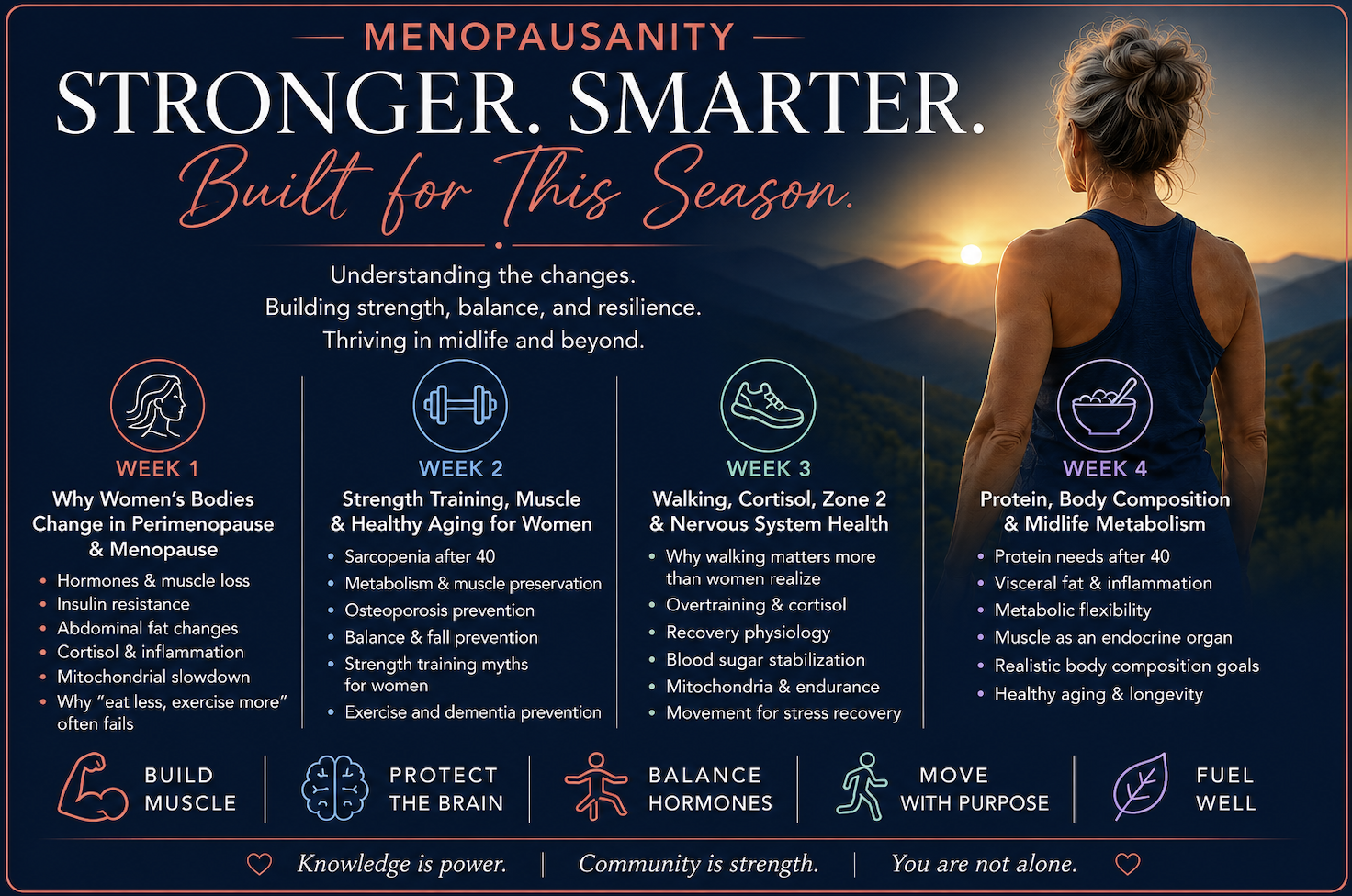
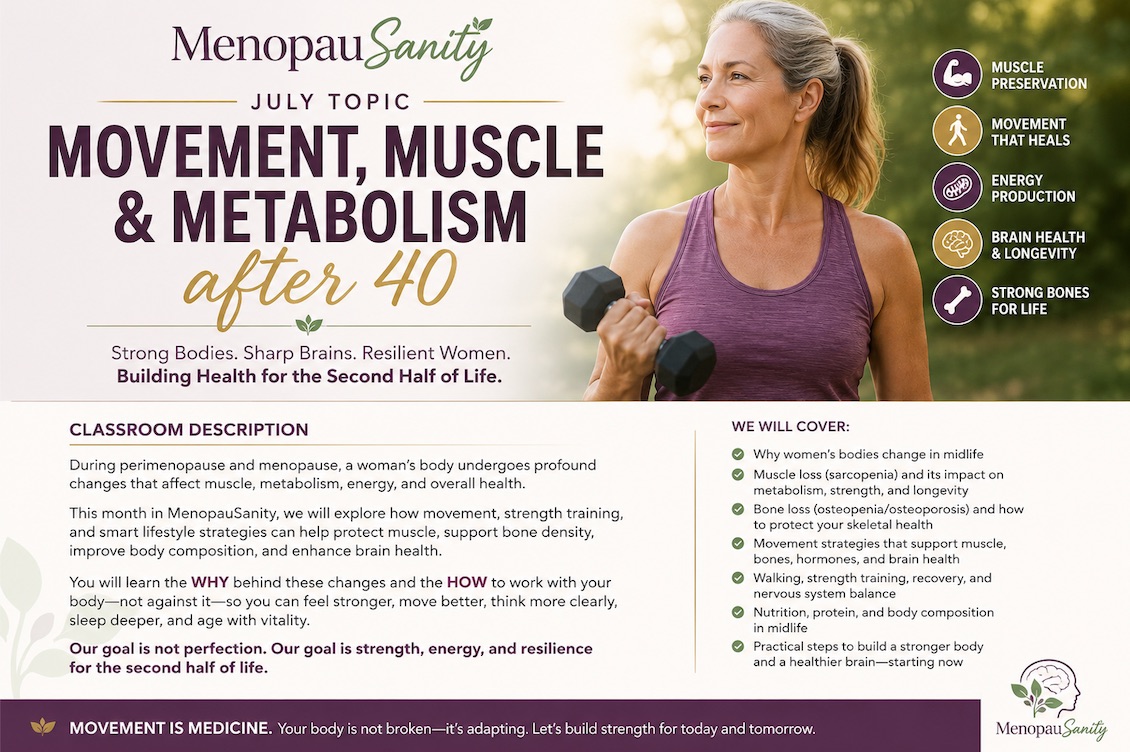
This month inside MenopauSanity, we are going deeper into:
muscle preservation during midlife
metabolism and insulin resistance
strength training for longevity
walking, cortisol, and nervous system recovery
protein, body composition, and healthy aging
osteoporosis prevention and brain health
My goal is to help women better understand the physiology of midlife so they can make more informed, sustainable decisions about how they support their bodies and brains during the aging process.
Because women deserve more than generic advice and fragmented information.
They deserve education, clarity, community, and a better understanding of what is actually happening inside their bodies in midlife and beyond.
Dr. Valerie Bonnett, MD
Physician-Led Education for Strength, Resilience & Vitality for Women in Midlife & Beyond